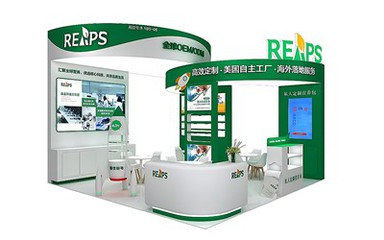

5 Core Communication Steps in China Booth Design
Mar 29, 2025
Guys! Are you most afraid that when participating in an exhibition, you spend a lot of money, the booth collapses, and the customers run away? Authoritative industry research data shows that as high as 30% of exhibitors each year experience problems in booth construction due to inadequate communication, and cost overruns are commonly as high as 50%! Not only does it waste a large amount of funds, but it may also cause the precious opportunity to expand the business to be missed.
Today, [Roundtable International Exhibition Co., Ltd.] will break down the five core communication links in the whole process of China Booth Design. After reading this, you will surely avoid pitfalls and feel at ease, and the booth effect will be maximized directly!

I. The Requirement Research Stage: Thoroughly Understand the Intentions of the Client
The Soul-searching Question: What exactly do you want?
Pain Point: In the design and construction of China booths, designers and clients often fall into a communication dilemma of "talking at cross purposes". Even after the plan has been revised eight times, it is still difficult to be satisfactory. Designers carry out their work based on their own experience and creativity, and clients, due to their unfamiliarity with professional terms, cannot clearly elaborate their ideas in their minds. The misalignment of communication between the two parties not only wastes a lot of time and energy but may also delay the project progress, bringing a lot of troubles to both parties.
Communication Focus:
1. Brand DNA Extraction: The color of the LOGO, the corporate slogan, and the exhibition style over the years are important manifestations of the brand image. It is best to ask the client to send you 10 reference pictures! Through the reference pictures, designers can more intuitively grasp the client's aesthetic preferences and style tendencies. For example, a well-known automobile brand has always adopted a highly technological style in previous exhibitions, making extensive use of metallic materials and blue lighting. When the exhibition booth designer received a new exhibition requirement, by referring to the pictures of previous exhibitions, the design direction was quickly determined, and the approval rate of the plan was greatly improved.
2. Functional Requirement List: How many products need to be placed? Is a live broadcast room/VR experience area needed? Where is the toilet located? Clarifying the functional requirements is the basis of booth design. Different product display requirements and functional area settings will directly affect the layout and space utilization of the booth.
3. Reveal the Budget Bottom Line: Don't be shy! Just ask "Dear, is the budget for this time 50,000 yuan or 500,000 yuan?" to avoid redoing the exhibition booth design due to exceeding the budget. When a certain home furnishing brand was preparing for an exhibition, the designer designed a luxurious booth plan without knowing the budget in advance. When it was learned that the client's budget was limited, the plan had to be overturned and redone, which not only wasted the design time but also made the client question the designer's professionalism.
Case: A certain technology company did not mention in advance that "it should be able to be disassembled into modules for repeated use", and as a result, the designer made an overall wooden structure, which was directly scrapped during the dismantling of the booth, resulting in a loss of 200,000 yuan! This case warns us that in the requirement research stage, no detail should be ignored, and the communication with the client must be comprehensive and in-depth.
II. The Plan Negotiation Stage: From "I Think" to "We All Think"
The Art of the Game in Exhibition Booth Design Drafts:
Pain Point: In the process of exhibition booth design, some designers will fall into the trap of self-indulgent design. They are overly immersed in imaginative creativity, making extensive use of cool special effects and complex structures, but ignoring the client's actual needs and market positioning. The final presented plan neither meets the client's expectations nor is it easy to attract the target audience, and naturally cannot be recognized by the client.
Communication Skills:
1. 3D Renderings are a Must: Use SketchUp or 3dsMax for dynamic demonstrations, and even the lighting angles can be adjusted! The client can raise suggestions like "Add a light strip here" while watching. Through dynamic demonstrations, the client can more intuitively feel the spatial layout and lighting effects of the booth, and put forward modification suggestions in a timely manner, avoiding the discovery of problems only after the construction.
2. AB Plan Psychological Tactics: Give the client two choices - ① The conservative version completely following the brief ② The version with trendy operations that incorporates industry trends (such as metaverse virtual human guided tours), and 80% of the clients will choose ②! This way can not only meet the client's guarantee of basic needs but also stimulate their interest in innovative plans and enhance the attractiveness of the plan.
3. Detail Confirmation List: Choose matte or glossy for the material? Use exposed or concealed wiring for the circuit? Sign a confirmation letter to avoid disputes. In the plan confirmation stage, clarifying the details can effectively reduce later disputes and changes. During the construction of a certain jewelry brand booth, due to the failure to confirm the color of the lights, the on-site lighting effect was far from the expected one, and the lamps had to be replaced, increasing the cost and construction period.
Pitfall Avoidance Guide:
There are some female colleagues from the contracting party who have encountered the situation where the China booth design and construction plan was revised to the 10th draft. An originally very creative plan was always unsatisfactory to the boss because the contact person of the client conveyed it incorrectly. Later, it was found that the contact person did not convince the boss... Be sure to confirm the final decision-maker! Identifying the decision-maker can make the communication reach the core directly, avoid ineffective rework, and greatly improve the communication efficiency.
III. The Construction Alignment Stage: The Magic of Turning Drawings into Reality
Translating the Jargon of the Foreman:
Pain Point: In the design and construction of the booth, the on-site construction is completely different from the design drawing! The construction team does not deeply understand the key information of the drawing, and coupled with the loose control in the procurement link, the materials are of inferior quality or do not meet the specifications, resulting in a big gap between the booth's size, color, and spatial layout and the expectations of the design drawing.
Key Actions:
1. Confirmation of Material Samples: Which Pantone color number is the "advanced gray" in the renderings? Let the client touch the texture with the fabric sample. Through the confirmation of the physical object, it can ensure that the color and texture of the materials meet the client's expectations and avoid disputes caused by color differences and texture problems.
2. Daily Construction Live Broadcast: Create a WeChat group and send on-site photos and progress reports in the morning and evening respectively, which will greatly increase the client's sense of security. Real-time progress reports allow the client to understand the construction situation at any time and enhance their trust in the construction team.
3. Communication of Emergency Response Plans: Agree in advance on "What should we do if there is a height limit in the venue?" and "How to deal with a sudden power outage", and don't shift the blame when problems occur. Formulating emergency response plans in advance can enable a quick response in case of emergencies and reduce losses. At the site of a certain food exhibition, due to the temporary height limit of the venue, the construction team adjusted the height of the booth in a timely manner according to the pre-formulated plan, ensuring the smooth progress of the exhibition.
4. Real Problem Occurrence Scene: A certain beauty booth tripped the circuit breaker directly when all the high-power lights were turned on because the voltage of the venue was not communicated clearly, and the live broadcast room became a "strange scene" on the spot... This case reminds us that in the construction alignment stage, communication with the venue side is equally important, and any detail may affect the smooth progress of the exhibition.
IV. The Acceptance Dispute Stage: Being Serious Can Avoid Troubles
Items That Must Be Checked According to the Acceptance List:
1. Structural Safety: In booth design, it is necessary to do a good job in structural safety inspection. After the exhibition booth is built, shake the pillars vigorously to check their stability, and at the same time, carefully check whether the glue overflows at the joints. Structural safety is the lifeline of the booth. Once there are safety hazards and the booth collapses during the exhibition, it will endanger people's lives and cause irreparable losses.
2. Lighting Inspection: Open the camera of the mobile phone to check if there is any stroboscopic effect, and the color temperature in the white light area must be unified (otherwise, the photos will look like horror movies). The lighting effect directly affects the display effect of the exhibits and the audience's experience, and a unified color temperature can create a comfortable display environment.
3. Fire Escape Route: Don't let the beautiful decorations block the safety exit! Otherwise, the security inspection will ask you to dismantle the booth in no time. The unobstructed fire escape route is an important guarantee for the safety of the exhibition and relevant regulations must be strictly observed.
4. Communication Template: "Dear, there is a small problem here, let's take a look together~" (Never start with "You did it wrong"!) Appropriate communication language can avoid the escalation of conflicts and promote the smooth resolution of problems.
V. The After-sales Review Stage: Turn the Client into a Repeat Customer
The Amazing Operation of Data-based Review:
1. Heat Map Analysis: Install a passenger flow counter in the booth and tell the client that "The passenger flow in Area C is the least, and it will be more popular to place the products in Area A next time!" Through data analysis, provide targeted suggestions for the client to help them improve the exhibition effect.
2. Exhibition Booth Construction Cost List: Clearly list that "XX yuan was saved on wood because of the modular design", and the client will feel that the money is well spent. A transparent cost list allows the client to clearly understand the whereabouts of each expense and enhances their trust in the construction team.
3. Sharing Photos on Moments: Take a nine-square-grid photo of the beautiful on-site scene and @ the client, and casually ask "Shall we make an appointment for the next XX exhibition?" Through social media interaction, not only can the construction results be displayed, but also the relationship with the client can be enhanced, laying the foundation for follow-up cooperation.
Summary of the Truth of China Booth Design and Construction Communication:
The essence of communication in China booth design and construction is to "translate the client's dream into the construction team's drawings". From the requirement research to the after-sales review, in each link, use the awareness of the contracting party of "confirm receipt" and "modify immediately", and match it with the attitude of an expert of "professional suggestions" and "data support". Remember, the crying child gets the milk, and the inquisitive contracting party won't take the blame! Master these core communication skills, and you will stand out in China booth design and construction projects and win the trust and good reputation of the client!